
Best picks
White Sneakers in a Canadian Winter: Waterproof Picks, Salt and Slush (2026)
 By Ethan Alexander Whitmore, Lab Editor
The picks
Chosen on construction, materials, price and availability in Canada. Lab results are added as each pair finishes testing.
| # | Pick | Best for | Price |
|---|---|---|---|
| 1 | Vessi Weekend Classic | Best waterproof | CA$150 |
| 2 | Nike Air Force 1 '07 | Best for slushy sidewalks | CA$150 |
| 3 | adidas Stan Smith | Easiest to wipe clean | CA$130 |
| 4 | New Balance 550 | Best leather court shoe for salt season | CA$149.99 |
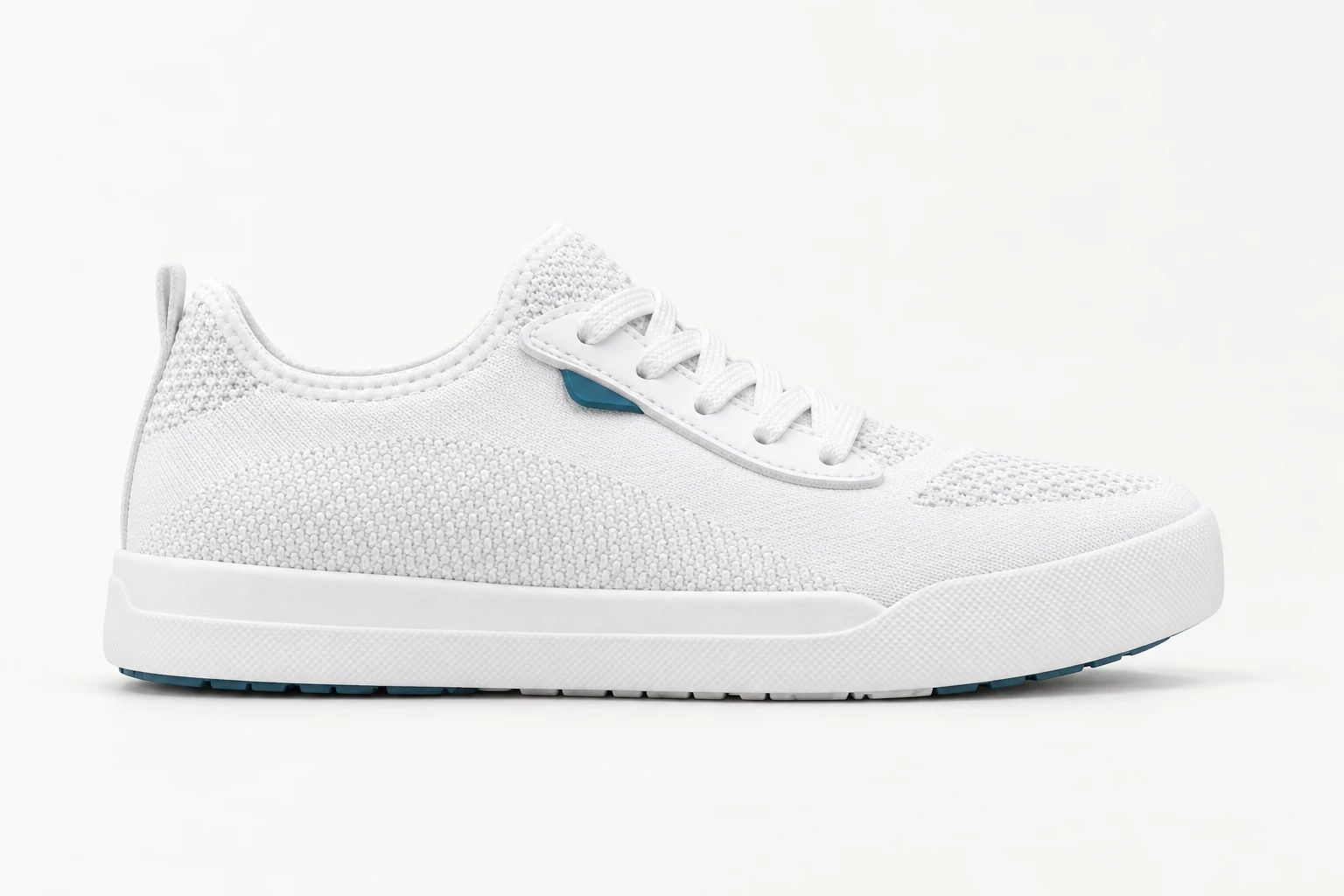
Vessi Weekend Classic
Waterproof · Marble White
A waterproof knit upper from Vancouver-based Vessi, built for rain and slushy sidewalks. The low collar still lets slush in if you step in deep enough.
CA$150Oct 2026 price- Upper
- Dyma-tex waterproof knit (Vessi's four-layer, 4-way stretch membrane knit)
- Sizes
- Men's · Women's · Kids
- Winter
- Winter-ready
Good
- Waterproof knit upper with a 365-day waterproof guarantee from Vessi
- Labelled vegan and PFAS-free by Vessi
Watch out
- No insulation or traction claims, so it is not a deep-cold or icy-sidewalk shoe
- Runs snug; Vessi suggests sizing up in the men's version
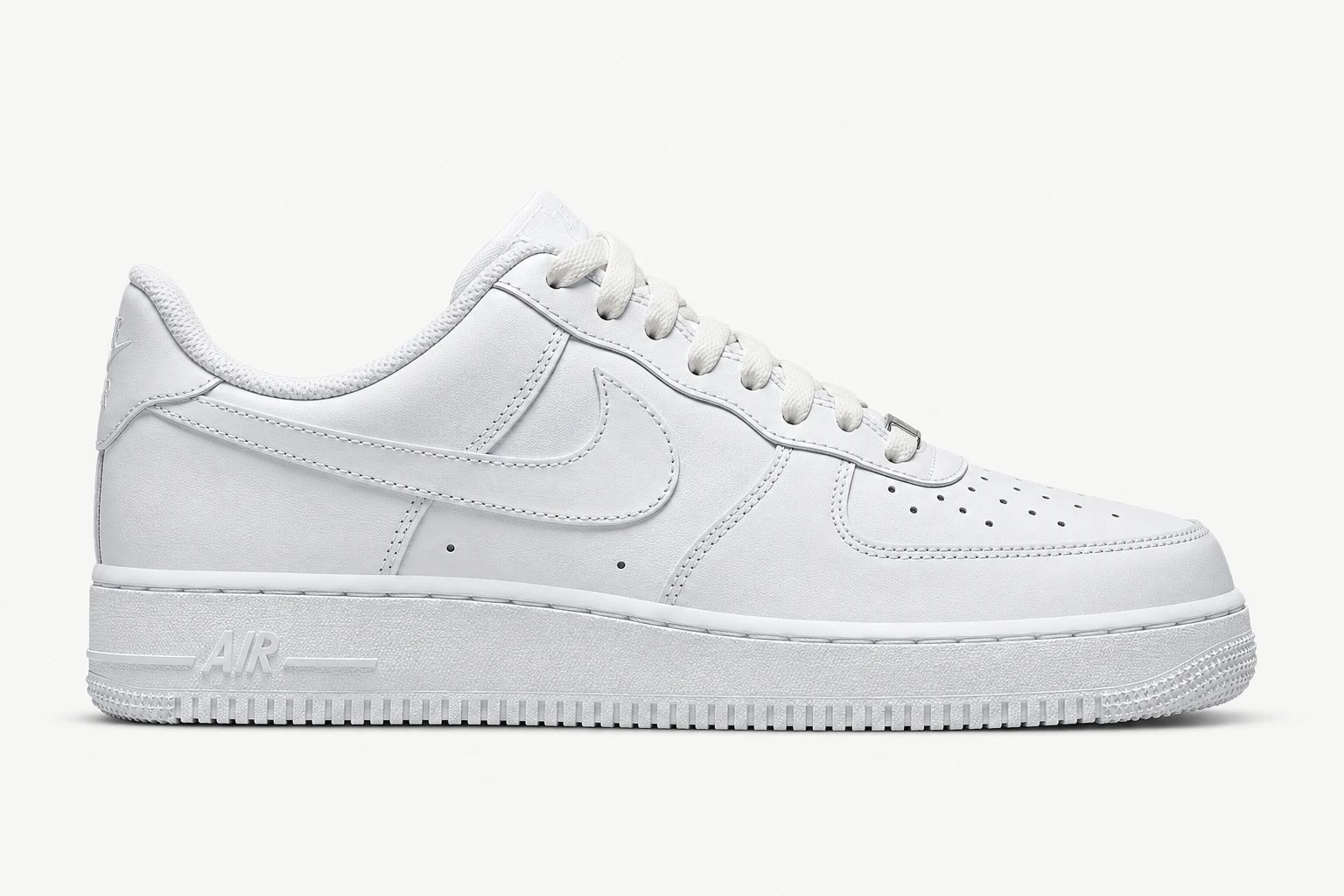
Nike Air Force 1 '07
Court · White / White
A leather upper on a thick rubber sole that keeps the upper higher above wet pavement than a slim tennis shoe. Wipe and condition the leather after salt.
CA$150Oct 2026 price- Upper
- Leather with a perforated toe box and stitched overlays
- Sizes
- Men's · Women's · Kids
- Winter
- Winter with care
Good
- Same CA$150 price at Nike Canada and three major Canadian retailers
- Leather upper is easy to wipe clean
Watch out
- Nike says it fits large; you may need half a size down
- Perforated toe box isn't water-resistant
Where to buy in Canada
Prices checked October 23, 2026. They change often.
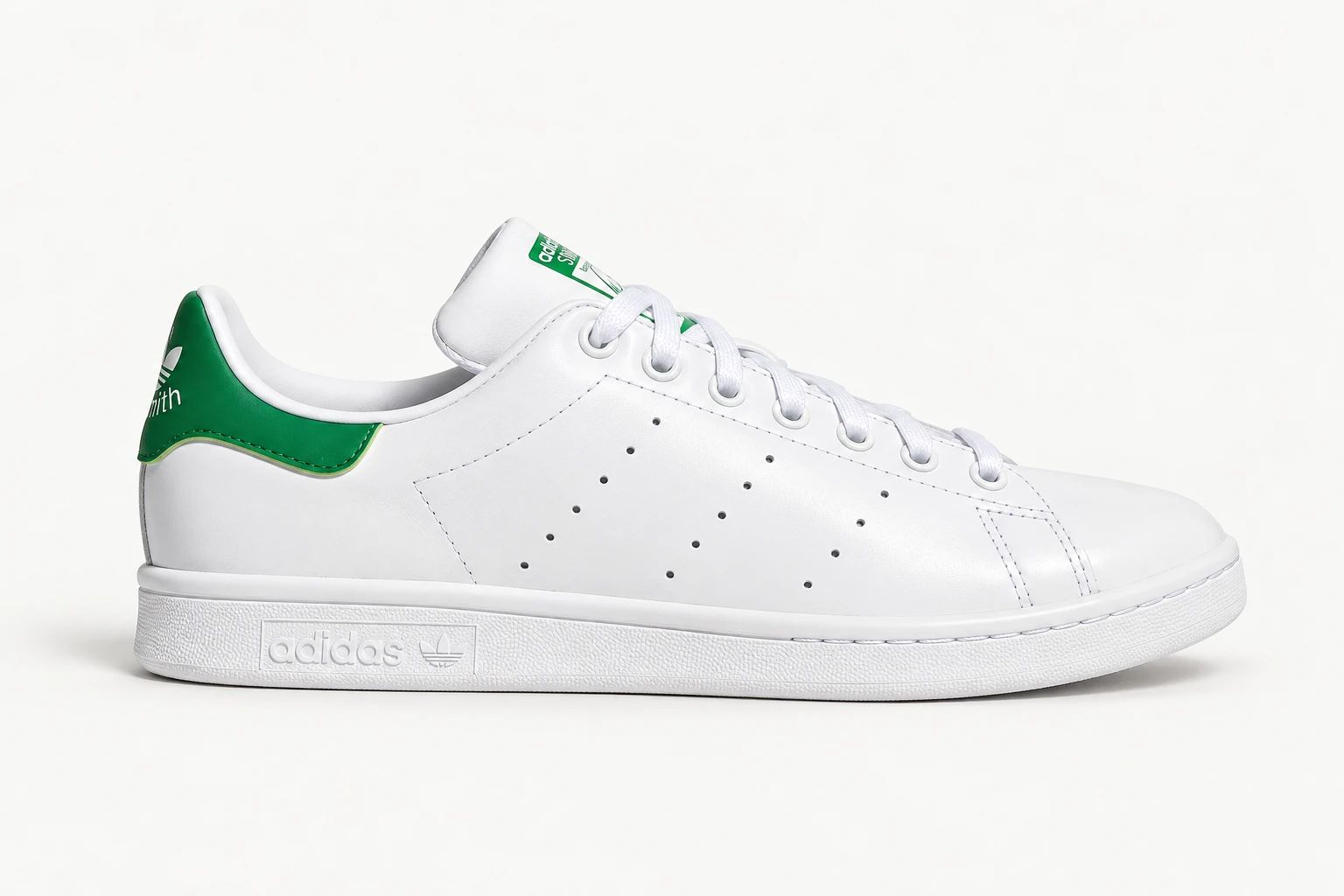
adidas Stan Smith
Court · Cloud White / Core White / Green
The standard version's synthetic upper doesn't soak up salty water the way canvas or suede does, so a damp cloth after each wear goes a long way.
CA$130Oct 2026 price- Upper
- Synthetic leather, per adidas Canada (some retailer listings describe it as leather)
- Sizes
- Men's · Women's · Kids
- Winter
- Winter with care
Good
- Widely stocked in Canada at a steady CA$130
- Unisex sizing from M 3.5 to M 21, per adidas Canada
Watch out
- Not waterproof; the low collar lets slush in
- The current adidas Canada listing says synthetic leather, not leather
Where to buy in Canada
Prices checked October 23, 2026. They change often.
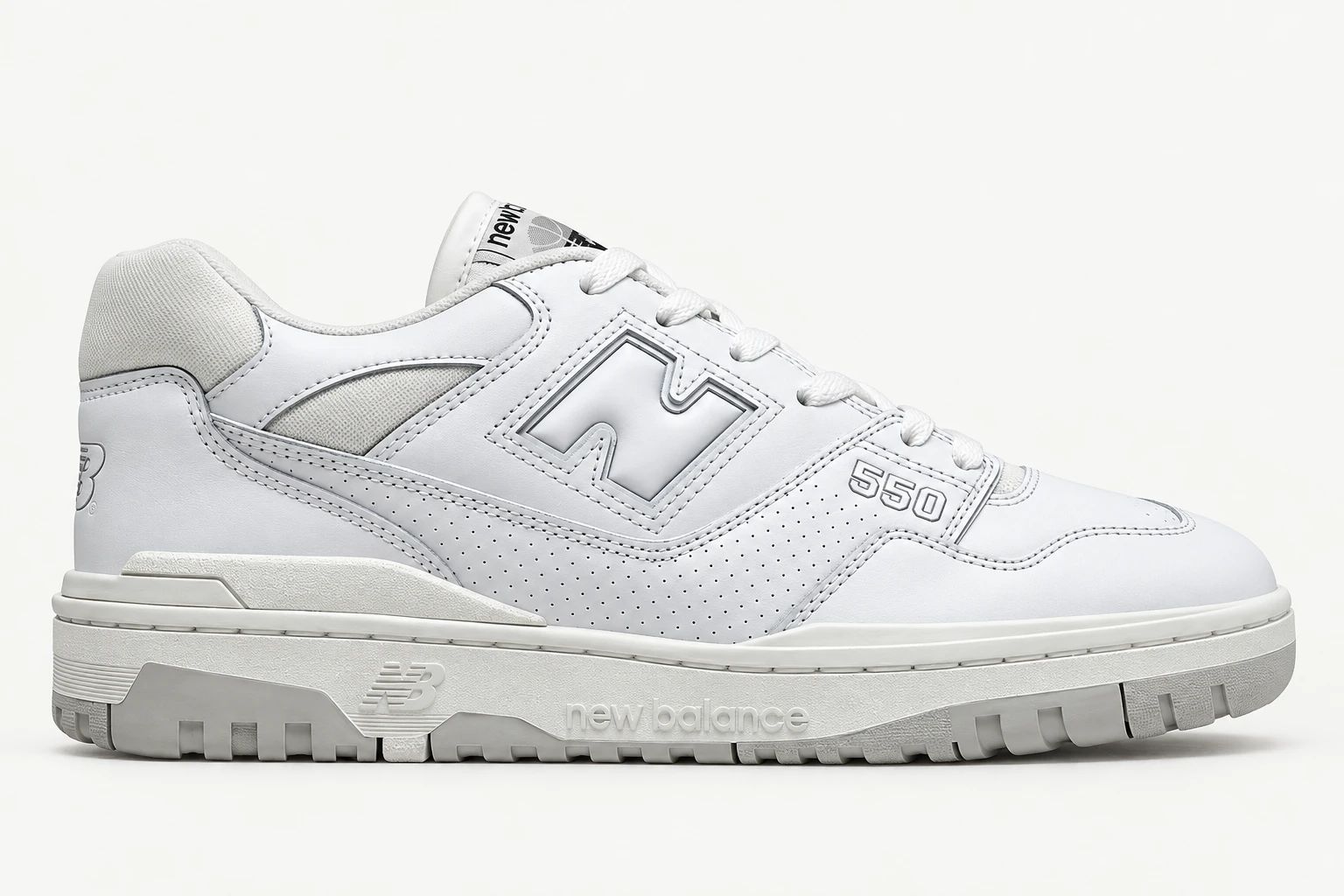
New Balance 550
Court · White / White
A perforated leather upper on a sturdy rubber sole. Smooth leather wipes clean, but condition it regularly so salt doesn't dry it out.
CA$149.99Oct 2026 price- Upper
- Leather (some retailer listings say synthetic leather)
- Sizes
- Men's · Women's · Kids
- Winter
- Winter with care
Good
- Leather upper and rubber sole, per New Balance Canada and retailers
- Unisex sizing, with women's and big kids' versions
Watch out
- All-white pair was out of stock at New Balance Canada in October 2026
- Not waterproof
Where to buy in Canada
Prices checked October 23, 2026. They change often.
Do white sneakers work in a Canadian winter?
Some do, on the right days. Smooth leather or synthetic leather on a rubber sole copes with cold, dry sidewalks and light slush, as long as you wipe off road salt the same day. Canvas, mesh and suede soak up salty water and stain. For deep snow, slush above the sole or ice, white sneakers are the wrong shoe.
Think of winter in three kinds of days:
| Conditions | White sneakers? | What to wear |
|---|---|---|
| Cold and dry, bare pavement | Yes | Leather or synthetic court shoe; wipe after |
| Wet, light slush, salted sidewalks | With care | Waterproof sneaker or smooth leather on a thick sole; clean the same day |
| Deep snow, slush over the sole, ice | No | Insulated boots with an ice-ready outsole |
Our picks are based on construction, materials, price and availability in Canada; hands-on Lab results are being added as each pair finishes testing. Starting in November 2026, our salt and slush test will soak each upper in a road-salt solution, dry it, photograph it, clean it and measure the stain left behind. Results will be added here as they come in.
What does road salt do to white sneakers?
Road salt leaves white tide marks when salty water dries on a shoe, and on leather it does lasting damage: it draws out moisture, which over time leads to cracking. Canada spreads about 5 million tonnes of road salts a year, mostly sodium chloride, along with calcium, magnesium and potassium chlorides, according to Environment and Climate Change Canada.
What happens on each material:
- Smooth leather. The salt line sits on the surface at first and wipes off if you’re quick. Left for days, it dries the leather and can leave a permanent mark.
- Synthetic leather. Doesn’t absorb salt, so residue usually wipes off. The stitching and edges can still hold salt.
- Suede and nubuck. The open surface traps salt and darkens where it’s wet. It needs a brush and a careful, light clean.
- Canvas, mesh and knit. Salty water soaks straight through, so stains spread and the shoe takes longer to dry.
One rule from shoe-care specialists matters more than any product: get all the salt off before you apply conditioner, cream or a protector spray. Otherwise the salt gets sealed in and keeps working on the leather. Our salt stain guide has the full method.
What does “waterproof” actually mean on a sneaker?
A waterproof sneaker has a barrier that liquid water can’t pass through, usually a membrane with pores smaller than a water droplet but big enough to let sweat vapour out, plus construction that seals the seams. Water-resistant means the material slows water down, often thanks to a coating that wears off with use. Leather by itself isn’t water-resistant.
Three things to check before you trust the label:
- Is it the upper or the whole shoe? A waterproof upper doesn’t help if slush pours in over a low collar. Low sneakers are only waterproof up to the top of the shoe.
- Built in or sprayed on? A membrane or waterproof knit is built into the shoe. A water-repellent coating (often called DWR) sits on the surface and fades with wear and washing.
- Seams and tongue. Seams and the gap beside the tongue are common weak points. A waterproof material only works if the shoe is built so water can’t get around it.
Vessi says its Dyma-tex waterproofing is built into the knit upper itself, with nano-sized pores that keep water out and let sweat escape, rather than coming from a spray or coating. Vessi also warns that strong detergent or bleach can weaken a water-repellent finish, so clean waterproof sneakers with mild soap. The Weekend is the only shoe on our launch list sold as waterproof.
Do waterproofing sprays work on white sneakers?
They help, but they don’t make a shoe waterproof. Protector sprays such as Crep Protect leave a water- and stain-repellent coating that makes water bead and roll off, so dirt and salty slush wipe away more easily. The coating wears off with use, so you have to reapply it, and it does little against a soaking.
How to get the most from a spray, based on Crep Protect’s own directions:
- Start with clean, completely dry shoes. Brush off loose dirt, and make sure no salt is left on them.
- Hold the can about 20 cm away and spray in a steady sweep.
- Apply two coats, with about 10 minutes of drying time in between.
- Reapply about every two weeks with daily wear, and more often in rain, snow or mud.
Sprays are most useful on canvas, mesh and suede, where they slow down how fast salty water soaks in. On smooth leather and synthetic uppers they mainly make wiping easier. Test any spray on a hidden spot first. Our cleaner guide compares protector sprays with cleaning kits.
Why are sneakers a poor choice on ice?
Grip on ice comes mostly from the outsole, and sneaker outsoles aren’t designed for it. At Toronto’s KITE WinterLab, researchers rate winter footwear by the steepest icy slope people can walk without slipping. The pass mark is 7 degrees, and most footwear they test scores around 2 or 3 degrees. That’s winter footwear, not sneakers.
The outsoles that do well use special compounds: hard mineral particles, glass fibres embedded in the rubber, or spikes and cleats. Flat court-shoe rubber has none of these. So even if your white sneakers stay dry, they won’t keep you upright on a glazed sidewalk.
On icy days, wear boots with an ice-specific outsole, or add slip-on ice cleats over your shoes for short trips. Save the white sneakers for bare pavement.
How should you care for white sneakers in winter?
Clean them the same day they meet salt, dry them slowly, and condition leather once it’s dry. Brush off dry salt, wipe the marks with diluted white vinegar, rinse with a damp cloth, stuff the shoes with paper and leave them at room temperature. Heat from a radiator or hair dryer can crack leather and warp soles.
| When | What to do |
|---|---|
| Before the season | Clean thoroughly; apply a protector spray to dry, salt-free shoes |
| After each salty walk | Brush off dry salt; wipe with a damp cloth from the top down toward the sole |
| When tide marks appear | Wipe with equal parts white vinegar and water; rinse with plain water |
| Drying | Paper inside, room temperature, no direct heat; let them dry fully before the next wear |
| Every few weeks | Condition leather once it’s clean and dry; reapply protector spray |
| End of season | Deep clean, condition, store out of sunlight |
Rotating two pairs helps more than any product: each pair gets a full day to dry. For step-by-step cleaning by material, see how to clean white sneakers.
Which white sneakers should you avoid in salt season?
Leave canvas, mesh, non-waterproof knit and suede on the shelf until the salt is swept up in spring. They soak up salty water, stain faster and take longer to dry. Smooth leather, synthetic leather and waterproof knit uppers on rubber soles are the practical choices, and even they need cleaning the same day.
| Upper | Winter verdict | Examples from our launch set |
|---|---|---|
| Waterproof knit | Best option, below the collar | Vessi Weekend |
| Smooth leather on a thick rubber sole | Good with same-day cleaning and conditioning | Air Force 1 ’07, New Balance 550 |
| Synthetic leather | Good; wipes clean easily | Stan Smith |
| Leather with suede overlays | Avoid on salted days; the suede marks | Samba OG |
| Canvas | Avoid on salted days | Chuck 70 Low, Chuck Taylor Lift |
| Mesh or non-waterproof knit | Avoid on salted days | On Cloud 6, New Balance 530 |
For year-round picks, see our master list of the best white sneakers, and for leather options our white leather sneakers guide.
Questions people ask
Can you wear white sneakers in winter in Canada?
Yes, on cold, dry days and in light slush, if they have smooth leather or synthetic uppers on rubber soles and you wipe off road salt the same day. Canvas, mesh and suede soak up salty water. For deep snow, slush above the sole or icy sidewalks, wear insulated boots with an outsole designed for ice.
Are Vessi shoes really waterproof?
Vessi says its Dyma-tex waterproofing is engineered into the knit, with nano-sized pores small enough to keep water out while letting sweat and heat escape, not added as a spray or coating. Even a waterproof upper can't stop slush coming in over a low collar. Our salt and slush test will check how the Weekend performs in practice.
Does Crep Protect make shoes waterproof?
No. Crep Protect and similar sprays add a water- and stain-repellent coating that makes water bead and slide off, which helps in rain and light slush. They don't make a canvas or mesh shoe waterproof, and the coating wears off. Crep Protect suggests reapplying about every two weeks, and more often in rain, snow or mud.
How do you get salt stains off white sneakers?
Let the shoes dry, brush off loose salt, then wipe the marks with a cloth dampened in equal parts white vinegar and water. Wipe again with plain water, stuff the shoes with paper and air dry away from heat. Condition leather afterwards, because salt dries it out. Our salt stain guide has methods for each material.
Are sneakers safe on icy sidewalks?
Not really. Researchers at Toronto's KITE WinterLab found that grip on ice depends mainly on the outsole, and even most winter footwear scores well below their 7-degree passing mark. Sneaker outsoles aren't designed for ice. On icy days, wear boots with an ice-specific outsole or slip-on ice cleats.
Sources
- Environment and Climate Change Canada: Code of practice for the environmental management of road salts
- Shoegazing: How to prevent and remove salt stains from shoes
- Cottage Life: Tips for removing salt stains
- Reviewed: How to get salt stains out of your shoes
- ROYER: Waterproof and water resistance, a difference not to be overlooked
- Vessi Canada FAQ (Dyma-tex waterproofing, care, shipping, returns)
- Wikipedia: Vessi (Vancouver headquarters)
- MEC: Vessi Weekend waterproof sneaker
- Vessi Canada: How to clean waterproof shoes
- Vessi: Cleaning your shoes
- Crep Protect: How to apply the Crep Protect spray
- McGill Office for Science and Society: Will the right boots stop you slipping on ice?
- Hospital News: Most winter boots are too slippery to walk safely on icy surfaces
- Nike Canada: Air Force 1 '07 product page
- adidas Australia: Stan Smith FX5502 product page (synthetic upper)
- Sneaker News: A history of the New Balance 550
Change log
- First published.